Published November 2025
Microchipping is one of the most important things you can do to protect your pet. This simple procedure provides permanent identification that can reunite you with your lost companion and is legally required for all dogs in Ireland. Here's everything you need to know about microchipping your cat or dog.
Why Microchipping Is Essential
Every year, thousands of pets go missing in Ireland. While collars and tags are helpful, they can fall off or become damaged. A microchip provides permanent identification that stays with your pet for life.
The benefits of microchipping include:
- Permanent Identification: Unlike collars or tags, a microchip can't be lost or removed
- Greatly Increases Reunion Chances: Studies show microchipped dogs are more than twice as likely to be reunited with their owners
- Legal Compliance: Required by law for all dogs in Ireland
- Required for Travel: Essential if you want to travel within the EU with your pet
- Insurance Requirement: Most pet insurance policies require microchipping
- Quick and Simple: The procedure takes just seconds with no anaesthetic needed
How the Procedure Works
Microchipping is a quick and straightforward procedure that can be done during a routine consultation:
The Microchip Itself
A microchip is a tiny electronic device about the size of a grain of rice. It contains a unique 15-digit identification number that is linked to your contact details on a national database. The chip has no battery and lasts for your pet's entire lifetime.
The Implantation Process
- Your pet receives a quick health check to ensure they're well
- The microchip is loaded into a sterile applicator (similar to a slightly larger vaccination needle)
- The chip is implanted under the skin between the shoulder blades
- The entire process takes just a few seconds
- No anaesthetic is required—it feels similar to a routine vaccination
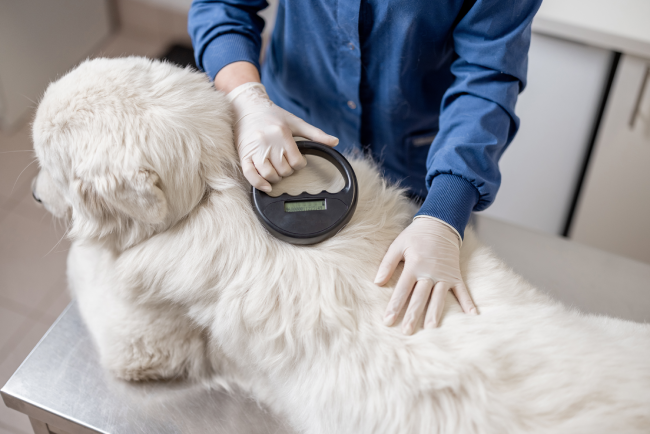
- We scan the chip immediately to confirm it's working correctly
Most pets tolerate the procedure very well with minimal discomfort. Puppies and kittens can be microchipped from as young as a few weeks old.
Legal Requirements in Ireland
For Dogs
Microchipping is mandatory for all dogs in Ireland. Here's what you need to know:
- All dogs must be microchipped by 12 weeks of age
- Dogs cannot be legally sold, given away, or rehomed without a microchip
- Owners can face fines of up to €5,000 for non-compliance
- The microchip number must be registered on an approved database
- Microchipping is required for dog licensing
- You must update your details if you move house or change phone number
For Cats
While microchipping is not yet legally required for cats in Ireland, we strongly recommend it. Cats are just as likely to go missing as dogs, and microchipping dramatically increases the chances of reuniting lost cats with their owners. Many cats who end up in rescue centers cannot be returned home simply because they have no identification.
Database Registration
Getting the microchip implanted is only half the process—registering your details on a national database is equally important.
How Registration Works
When we microchip your pet at TKVets, we handle the database registration for you. You'll need to provide:
- Your full name and current address
- Contact phone number and email address
- Your pet's details (name, breed, age, colour)
We'll register this information on an approved Irish database, ensuring that if your pet is found and scanned, the database will provide your current contact details to whoever finds them.
Keeping Your Details Up to Date
This is crucial: a microchip is only useful if your contact details are current. You must update the database if you:
- Move house
- Change your phone number
- Change your email address
- Rehome your pet
You can update your details directly with the database provider at any time. We can help you with this if needed.
Approved Databases in Ireland
In Ireland, approved microchip databases include:
- Fido (www.fido.ie)
- Europetnet (www.europetnet.com)
- AnimaIS (www.animais.com)
What Happens If Your Pet Goes Missing
If your microchipped pet goes missing and is found by a member of the public, vet, or animal shelter, they will scan the pet for a microchip. The scanner displays the unique chip number, which is then checked against the database to retrieve your contact details. You'll be contacted immediately so you can be reunited with your pet.
This is why keeping your details current on the database is so important—outdated information means you can't be reached.
After-Care
After microchipping, there is virtually no after-care required:
- You may notice a small bump at the injection site for a day or two—this is normal
- The area may be slightly tender for 24 hours
- No restrictions on exercise or bathing
- The chip cannot move around the body (it's designed to stay in place)
- You cannot feel the chip once the initial swelling subsides
We provide you with a certificate confirming your pet's microchip number. Keep this in a safe place along with your pet's other important documents.
Common Concerns
Will It Hurt My Pet?
The procedure causes only momentary discomfort, similar to a routine vaccination. Most pets don't react at all during the implantation.
Can the Chip Break or Stop Working?
Microchips are extremely reliable. They have no battery or moving parts and are designed to last for your pet's entire lifetime. Chip failure is exceptionally rare.
Can the Chip Track My Pet's Location?
No. Microchips are passive devices—they don't have GPS or tracking capability. They only transmit the ID number when scanned by a compatible scanner. If you want live location tracking, you'll need a separate GPS collar device.
Do I Need to Pay Annual Fees?
This depends on which database your pet is registered with. Some databases charge a one-time fee, while others may have optional annual fees for extra features. We'll explain the costs when we microchip your pet.
Frequently Asked Questions
Ready to Microchip Your Pet?
Visit our microchipping service page to learn more, or contact us to book an appointment.